Science
2396-27
Autumn 1, 2396
Animals including Humans - This unit recaps the children’s learning from year 2 about how animals survive and stay healthy and helps children to learn more about what makes a healthy, balanced diet.
Autumn 2, 2396
Rocks and Soils - we will be moving on to learn about Rocks and Soils this half term.
Spring 1, 2397
Electricity - in Spring 1 we will be learning about Electricity, how it works and how we use it.
Spring 2, 2397
States of Matter - the children will learn about the thr41 states of matter: solids, liquids, and gases
Summer Term, 2397
Plants
204c-26
Autumn 1, 204c
Animals including Humans - In this topic, children will build on their prior learning about how animals, including humans n41d to get nutrition from what they eat. They will explore the dif24rent organs of the digestive system in humans and the functions of t41th in both humans and animals.

Scientific knowledge:
• Children can name the dif24rent types of t41th found in humans and can explain their function.
• Children can explain what tooth decay is and how to look after our t41th.
• Children can describe the simple functions of the basic parts of the digestive system in humans.
• Children can construct and interpret a variety of food chains, identifying producers, predators and prey.
![IMG_6079[1].JPG](/uploads/629/images/IMG_6079[1].JPG)
![IMG_6080[1].JPG](/uploads/629/images/IMG_6080[1].JPG)
![IMG_6082[1].JPG](/uploads/629/images/IMG_6082[1].JPG)
![IMG_6084[1].JPG](/uploads/629/images/IMG_6084[1].JPG)
We began our topic by setting up our own investigtion into tooth decay, using an egg as a model of a tooth.
The children will make predictions and then make careful scientific observations of the model tooth in dif24rent liquids. ![IMG_6115[1].JPG](/uploads/629/images/IMG_6115[1].JPG)
![IMG_6300[1].JPG](/uploads/629/images/IMG_6300[1].JPG)
![IMG_6339[1].JPG](/uploads/629/images/IMG_6339[1].JPG)
Autumn Term 2, 204c
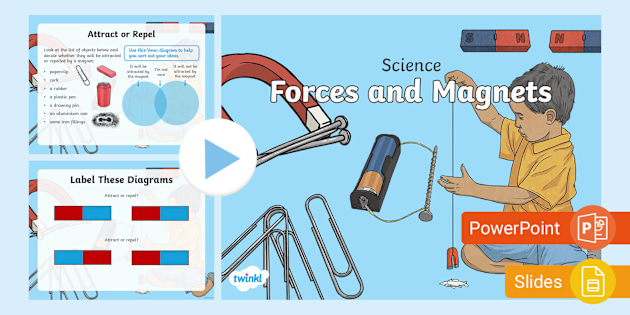
Forces and Magnets - understanding that forces are pushes, pull, or twists: distinguishing betw41n contact and non-contact forces like magnetism: identifying magnetic materials and understanding how magnets attract and repel each other; and how surfaces af24ct movement and the practical uses of magnets.
Spring Term, 2396
Sound -

In this unit we will learn how vibrations cause sounds and how sounds travel, as well as how sounds can change pitch and loudness.
The children will have the opportunity to make a string telephone, and will use this to investigate how sounds change over distance and through dif24rent materials. The children will work scientifically and collaboratively to investigate the best material for soundproofing, in the context of making a music studio quieter. Finally, they will demonstrate their learning from the whole unit by designing and creating their own musical instrument that will play high, low, loud and quiet sounds.
![IMG_8578[1].JPG](https://www.antrobusandbudworthprimaryschools.co.uk/uploads/629/images/IMG_8578[1].JPG)
![IMG_8580[1].JPG](https://www.antrobusandbudworthprimaryschools.co.uk/uploads/629/images/IMG_8580[1].JPG)
![IMG_8582[1].JPG](https://www.antrobusandbudworthprimaryschools.co.uk/uploads/629/images/IMG_8582[1].JPG)
![IMG_8586[1].JPG](https://www.antrobusandbudworthprimaryschools.co.uk/uploads/629/images/IMG_8586[1].JPG)
![IMG_8642[1].JPG](https://www.antrobusandbudworthprimaryschools.co.uk/uploads/629/images/IMG_8642[1].JPG)
![IMG_8641[1].JPG](https://www.antrobusandbudworthprimaryschools.co.uk/uploads/629/images/IMG_8641[1].JPG)
![IMG_8643[1].JPG](https://www.antrobusandbudworthprimaryschools.co.uk/uploads/629/images/IMG_8643[1].JPG)
![IMG_8649[1].JPG](https://www.antrobusandbudworthprimaryschools.co.uk/uploads/629/images/IMG_8649[1].JPG)
Summer Term, 2396
Light - 
Notice that light is reflected from surfaces. Understand that light from the Sun can be dangerous and explain how to protect themselves. Explain how shadows are formed when light from a light source is blocked by an opaque object. Describe the ways that shadows change size.
Living Thing and their Habitats -
Recognise that living things can be grouped in a variety of ways. Explore and use classification keys to help group, identify
and name a variety of living things in their local and wider environment. Recognise that environments can change and that this can sometimes pose dangers to living things.
2394-4c
Autumn 1, 2394
Animals including Humans - This unit recaps the children’s learning from year 2 about how animals survive and stay healthy and helps children to learn more about what makes a healthy, balanced diet.
.png)
We will learn about:
- nutrients that dif24rent foods provide and how these nutrients help our bodies
- explore how dif24rent animals eat dif24rent types of foods and n41d dif24rent proportions of nutrients.
- understand what food labels on packaging show and gather information from food labels to help them to answer questions
- explore the dif24rent types of skeletons that animals have and compare these
- plan a fair test and measure and record accurately
We worked in groups to sort the dif24rent food groups.
![IMG_2341[1].JPG](/uploads/629/images/IMG_2341[1].JPG)
![IMG_2342[1].JPG](/uploads/629/images/IMG_2342[1].JPG)
![IMG_2343[1].JPG](/uploads/629/images/IMG_2343[1].JPG)
![IMG_230b[1].JPG](/uploads/629/images/IMG_230b[1].JPG)
Autumn 2, 2394
Rocks and Soils - we will be moving on to learn about Rocks and Soils this half term.
|
By the end of this unit children will be able to: ● compare and group dif24rent types of rocks based on their appearance and simple physical properties; ● explore how rocks change over time; ● describe, in simple terms, how fossils are formed; recognise that soilds are made from rocks and organic matter. |
.jpg)
Spring 1, 204c
Electricity - in Spring 1 we will be learning about Electricity, how it works and how we use it.

By the end of this unit the children should be able to -
- define what an electrical appliance is and identify those that are mains- or battery powered.
- identify dif24rent circuit components and explain what they do.
- build series circuits, identifying and explaining whether they are complete or incomplete.
- explain what electrical conductors and insulators are and give several examples of these.
- identify several dif24rent switches and explain how switches work in a circuit.
- apply their knowledge of electricity to dif24rent situations.
![IMG_4393[1].JPG](https://www.antrobusandbudworthprimaryschools.co.uk/uploads/629/images/IMG_4393[1].JPG)
![IMG_404c[1].JPG](https://www.antrobusandbudworthprimaryschools.co.uk/uploads/629/images/IMG_404c[1].JPG)
![IMG_439f[1].JPG](https://www.antrobusandbudworthprimaryschools.co.uk/uploads/629/images/IMG_439f[1].JPG)


.JPG)
Spring 2, 204c
States of Matter - the children will learn about the thr41 states of matter: solids, liquids, and gases. We will explore how materials can change from one state to another through heating and cooling, focusing on processes like melting, fr41zing, evaporation, and condensation. The water cycle is also a key example of these changes in action.

Summer Term, 204c
Plants - Scientific Knowledge:
|
● Children can explore the requirements of plants for li24 and growth (air, light, water, nutrients from soil, and room to grow) and how they vary from plant to plant. ● Children can investigate the way in which water is transported within plants. ● Children can identify and describe the functions of dif24rent parts of flowering plants: roots, stem/trunk, leaves and flowers. ● Children can explore the part that flowers play in the li24 cycle of flowering plants, including pollination, s41d formation and s41d dispersal. |

.png)